


.png)
Your First Time Rock Climbing: What You Might Discover

Ask a group about to start their first time rock climbing what they’re worried about and you’ll usually hear one of two things: “I’m not strong enough” or “I’m not great with heights.”
Both are understandable. From the ground, a climbing route can look much harder than it feels once you start working out where to put your feet and hands. Throw in being asked to wear a helmet & harness, being told to trust a rope takes and you can see why it takes a bit of getting used to!
After years of introducing people to climbing, I’ve found that the most interesting part of a session often isn’t whether someone gets to the top. It’s watching the point where something unfamiliar starts to make sense.. the lightbulb "ah HA" moment!

It’s usually the feet
New climbers often try to pull themselves up with their arms. It works for a few moves, then their forearms get tired and everything feels twice as hard.
So we slow down and look at their feet. Perhaps there’s a small edge they hadn’t noticed, or they’re putting too much of their shoe on a hold stopping them from being able to footswap. Then They adjust their position, stand up on the foothold and suddenly the next handhold is within reach.
The move hasn’t changed. They’ve simply found a better way to do it. I like to think of it as vertical problem solving!
Those small discoveries are a big part of why climbing is so enjoyable. You don’t need to arrive with exceptional strength. You can learn a great deal by looking carefully, trying something and feeling the difference for yourself.
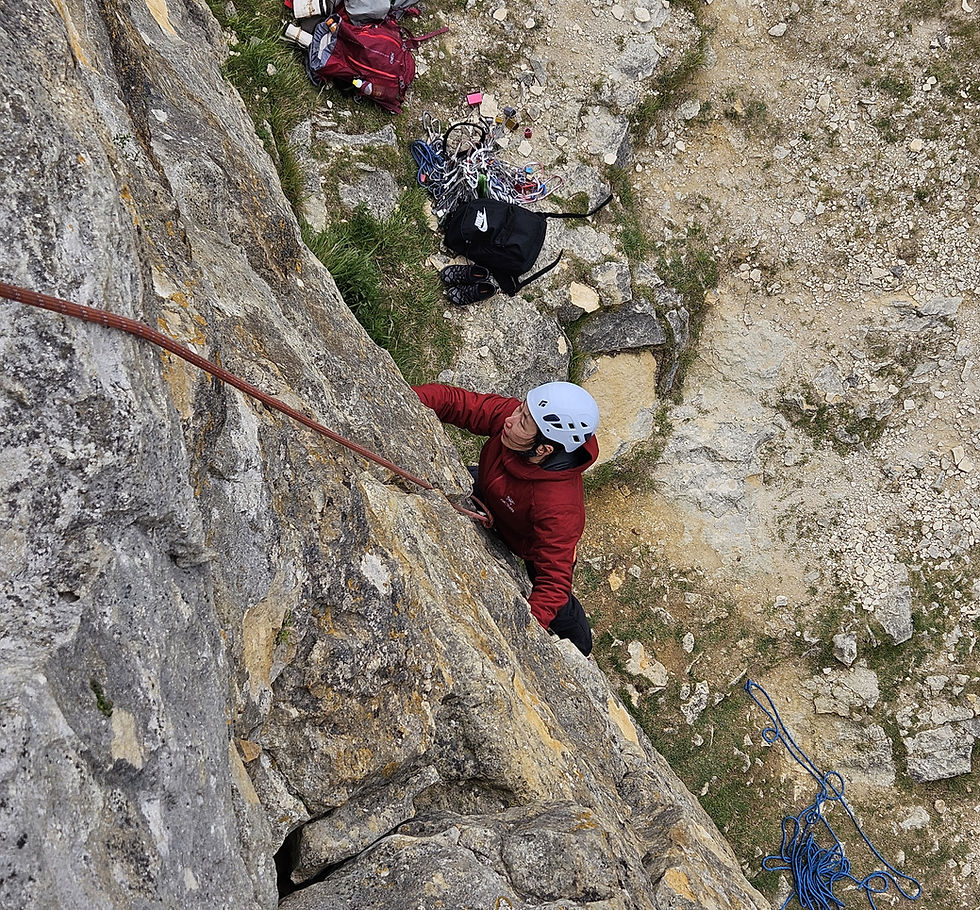
Learning to trust the rope
For some people, the climbing feels easier than letting go at the end. In fact, I have always mused that climbers fall into two categories: those who love climbing, but hate being lowered off, and those who hate the climbing, but loved being lowered off.
I’ve seen plenty of climbers reach a comfortable stopping point, ask to come down, and then cling to the wall while their belayer takes their weight. I don’t blame them. Leaning back into a harness for the first time feels strange, even after you’ve seen all the checks, even more so when it comes to autobelays, but that discussion is for another time.
We take time over that part. The climber and belayer check their equipment, we explain what will happen, and the climber can try putting weight on the rope close to the ground before climbing higher. Once they’ve felt the harness support them, coming down often feels far less daunting.
That doesn’t mean everyone’s nerves disappear. It means they’ve had a chance to understand the equipment and decide what they’re comfortable trying next. It also helps lessen the chances of a climber being at the top of a climb and then refusing to come down.... a note there for any new instructors reading this.

There’s no right way to approach your first time rock climbing
Some people arrive determined to reach the top. Others tell me they’ll be happy if they get a few metres off the ground. Both can and will have a brilliant session.
Someone might make it further than they expected. Someone else might stop halfway, have a rest, and decide to try again. Sometimes the moment they’re proudest of is a tricky move near the bottom that took three attempts to work out.
There use to be a term for adventurous activities like climbing that I was taught when I first became an instructor, it was "Challenge by Choice" and even though the industry has evolved since then, I am a strong believer of "Challenge by Choice". I’m careful not to turn every session into a test of how far someone can push themselves. Climbing is much more enjoyable when people feel able to ask questions, take a break or come down. Quite often, that freedom helps them try more than they thought they would.
There’s also a lot to enjoy beyond your own climb. A friend spots a foothold you’ve missed. Someone cheers when you make a move you’ve been working on. If you’re learning to belay, you begin to understand how much attention and communication goes into supporting the person on the rope.

What people take away
I can’t promise that one climbing session will transform anyone’s confidence. Some people leave wanting to book their next climb immediately; others are pleased they gave it a go and leave it there.
But what I do regularly see is someone arrive with a firm idea of what they can’t do, then surprise themselves; They trust a small foothold, rest on the rope, or try a move again after getting stuck. Those moments might seem minor to an experienced climber, but for a beginner they can be huge.
The important thing is that they did it themselves, with a bit of instruction and support. For a first climbing experience, that’s plenty to feel good about.
If you’ve been thinking about giving climbing a go, come and join us. You don’t need any experience, and you can take it at your own pace. Explore our rock climbing experiences


Comments